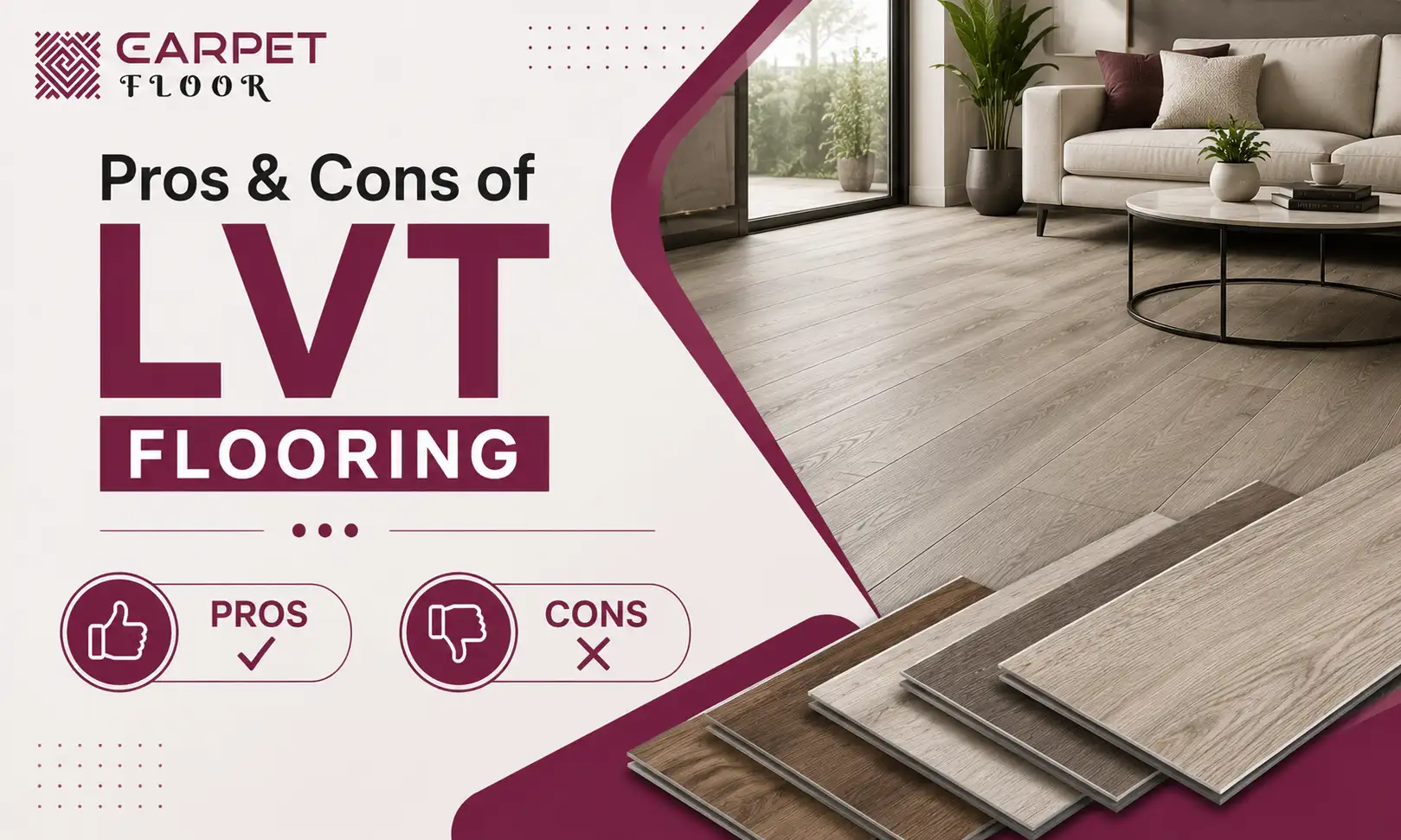
Choosing new flooring is quite confusing. Mostly Dubai homeowners are confused about the pros and cons of LVT floor. LVT mean for luxury vinyl tile. It looks like wood or stone but costs less. At Carpet Floor, we get daily questions about this floor material. This informational guide covers all the pros and cons of LVT flooring in simple and easy ways. Our blog will also tell you how LVT works, where to install LVT, and how to clean and maintain it.
No Comments
Pros and Cons of LVT Flooring
What is LVT Flooring?
LVT flooring is a main type of vinyl flooring Dubai. It is available in tile or wooden plank shapes. Each piece has four layers working together. The backing layer sits at the bottom. It adds stability and support. The core layer sits above it. This layer gives the plank strength and rigidity. Next comes the design layer. This layer holds a printed image of wood, stone, or tile. On top sits the wear layer. This clear coating protects the print from scratches and stains.
Pros of LVT Flooring
Waterproof Performance
LVT flooring resists water well. Spills sit on the surface without soaking in. A kitchen spill can sit for minutes with no damage.
High Durability
The core layer makes LVT tough. It handles daily foot traffic without wearing down fast. Many products last 15 to 25 years with normal use.
Scratch Resistance
The wear layer blocks most scratches. Pet claws and shoe grit rarely leave marks. A thicker wear layer gives even better protection.
Realistic Wood and Stone Appearance
Modern printing technology creates sharp, detailed designs. Many LVT planks look just like oak or marble. Guests often cannot tell the difference from a distance.
Comfortable Underfoot
LVT feels softer than tile or stone. The layers add slight cushioning. Standing in the kitchen for long periods feels more comfortable.
Easy Maintenance
The maintenance of LVT requires minimal effort. All that you will need is just a wet mop and some cleanser.
Easy Installation
Flooring Dubai systems using LVT usually have a click-lock system where there is no need for adhesive or nails to connect the planks. This is why DIY homeowners can lay an entire room within the weekend.
Suitable for High-Traffic Areas
LVT floor is best for long hallways, offices, and living room areas for heavy use. LVT holds up well in these high traffic spaces. Its wear layer keeps floors looking new longer.
Pet-Friendly
Pet owners like LVT for its scratch and stain resistance. Accidents wipe up fast without staining the surface. Claws rarely dent or scuff the planks.
Budget-Friendly
LVT is less expensive than solid wood floor and natural stone. LVT presents an equal appearance but costs less. Hence, it is highly recommended, especially when the budget for renovation is limited.
Cons of LVT Flooring
Can Dent Under Heavy Furniture
Heavy furniture legs can press dents into LVT. Using furniture pads helps prevent this problem. Moving heavy items without lifting them can also cause marks.
May Fade in Direct Sunlight
Some LVT products fade after years of strong sun exposure. UV-resistant coatings reduce this risk. Curtains or blinds also help protect the colour.
Difficult to Repair Individual Planks
Changing out just one plank may prove difficult. Glue-down LVT is particularly challenging to take off cleanly. The click-lock systems are easier to repair than glued down ones.
Requires a Smooth Subfloor
Bumps and dips in the subfloor show through LVT. Proper subfloor preparation is essential before flooring installation. Skipping this step leads to an uneven finished floor.
Temperature Sensitivity
Extreme cold or heat can affect vinyl planks. Very cold rooms may cause the material to stiffen. Very hot rooms may cause slight expansion.
Lower Resale Value Than Hardwood
Hardwood floors often boost home resale value more. Buyers sometimes view vinyl as a lower-end material. This gap is shrinking as LVT quality improves.
Possible VOC Emissions in Low-Quality Products
Cheap LVT may release volatile organic compounds. These emissions can affect indoor air quality. Choosing certified low-VOC products avoids this issue.
Where Can You Install LVT Flooring?
LVT works good in living rooms, bedrooms, and home offices. Its water resistance also suits kitchens and bathrooms. Retail spaces benefit from its durability under constant foot traffic.
LVT Flooring vs Laminate Flooring
| Feature | LVT Flooring | Laminate Flooring |
| Water Resistance | Fully waterproof | Water-resistant only |
| Durability | High, long lifespan | Moderate, wears faster |
| Maintenance | Simple damp mopping | Simple damp mopping |
| Comfort | Softer underfoot | Firmer underfoot |
| Cost | Mid-range pricing | Usually lower pricing |
| Installation | Click lock or glue down | Mostly click lock |
How to Maintain LVT Flooring
LVT flooring must be vacuumed or swept once a week. This is due to the abrasive material being harmful to the wear layer over a period of time. A soft-bristled tool must be used instead of a beater brush. The floor should be mopped with a vinyl floor cleaner. Ammonia-based cleaners and abrasive cleaners should be avoided. This is because they tend to dull the finish layer with regular use.
Common Mistakes to Avoid
A poorly made subfloor causes bumps as well as wear and tear. It is vital that one levels the subfloor before putting vinyl floors on top. This is not appreciated much by individuals. Selecting incorrect wear layer thickness will result in faster wear out of flooring. A busy room requires a thicker wear layer, while a less busy one can have a thinner wear layer.
Not paying attention to expansion spaces will result in buckling over time. Vinyl tends to expand and contract due to temperature fluctuations. It is recommended to leave an expansion space according to recommendations of the manufacturer. Harsh cleaners will strip the protective layer off the flooring. Cleaning solutions designed specifically for vinyl should be used.
Frequently Asked Questions
What is LVT flooring?
LVT flooring is luxury vinyl tile made of multiple protective layers. It mimics the look of wood, stone, or tile.
Is LVT flooring waterproof?
Yes, most LVT flooring is fully waterproof. It works well in kitchens and bathrooms.
How long does LVT flooring last?
Quality LVT flooring lasts 15 to 25 years. Lifespan depends on traffic and maintenance.
Is LVT flooring better than laminate?
LVT offers better water resistance than laminate. Laminate can sometimes cost less upfront.
Can LVT flooring be installed in bathrooms?
Yes, its waterproof design suits bathrooms well. Proper installation prevents water from reaching the subfloor.
Conclusion
LVT flooring is the most luxurious, durable and waterproof. Thus, it serves families who are on the go, pet owners, and people who want to save money. You may refer to the pros and cons stated above before making your decision. Carpet Floor professionals are always on standby to assist you in making a choice.