Carpets are necessary in home improvement, usually in closed areas. They add appeal, elegance, and comfort. Mosque carpets are a special type designed for prayer. They differ from regular home carpets. Mosque carpets focus on comfort and spiritual purpose.
So, how are mosque carpets different from regular ones? We will answer that today. No issue which carpet company in Dubai you choose, understanding the differences will help you make a good decision.
Here are some basic reasons that distinguish mosque carpets from regular carpets.
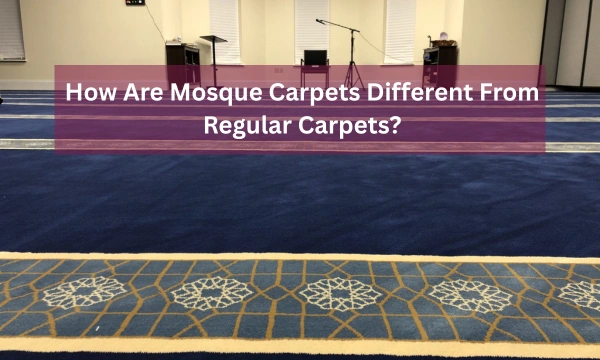
The mosque carpet design begins with its purpose. Mosque carpets are not merely decorative. They are, in fact, functional, as prayer, which is performed five times a day, must be made easy by these carpets. This has to be considered while designing a mosque carpet.
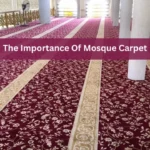
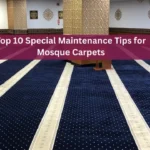
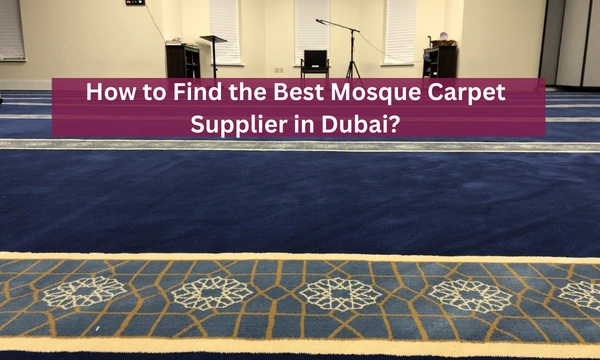
Unlike other carpets, mosque carpets not only serve aesthetic purposes. But also has elements to facilitate prayer performances. These include directional designs, which could be strips or arcs, to assist believers position themselves towards the Qibla, the direction of the Kaaba in Mecca.
In most cases, these custom carpets have markings that help people line up to pray shoulder to shoulder. They form a standardized flow in a congregational manner. Regular or ordinary carpets lack this feature.
The materials and fabric used to make these two carpets are same, but one has a unique feature for added comfort and functionality. Finally, the carpet for mosques is made from a combination of wool and polyester materials. This offers softness as well as amazing durability. Then there are heat set polypropylene fabric carpets for mosques that can offer warm comfort. For added comfort, some manufacturers add extra padding by the carpet manufacturer, which clearly shows that Mosque Carpets are different from normal home carpets in terms of design and material.
For the regular carpets, the materials range from your preferred options. You can choose to have all the natural sisal carpets and synthetic materials. There are also Handmade rugs and carpets under this category, which can be considered luxurious and quite expensive.
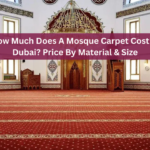
Mosque carpets are often produced in large, wall to wall layouts that cover the entire masjid area. Many of them are directly ordered to fit the exact measurements of a certain mosque. The design, color and spacing of rows are worked out so as not to break up when the carpet completely covers the long masjid hall.
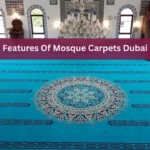
This is in stark contrast to many standard carpets or rugs, which are generally modular or even cut to fit more generalized dimensions. Customers may layer many carpets or mix styles overall, a masjid, something that would not be appropriate or functional in a mosque. The manufacturers of Mosque Carpets Dubai are professionals in making handmade designs that are not only stunning but also responsive to the needs of religious areas, from prayer hall layouts to acoustics and indoor air quality.
Religious settings require cleanliness. This follows because all customers must perform ablution (wudu) before prayers. Also, masjid carpets are easy to clean and maintain. This makes mosque carpets antimicrobial, waterproof, and dust free. This promotes ease of cleaning, hence short pile lengths to counteract their tendency to form dust.
Tan finishing carpets, which might be in use in residential rooms or lounges, might tend to be dense in pile form and might be of shag textures, which tend to be difficult to clean. Despite being pleasant to walk on, they tend to be inadequate in heavily populated public settings that require constant cleaning.
The other important factor is the sound. Echoes and noise in the mosques disturb the serenity of prayer. The design of mosque carpets helps in setting off the acoustics, hence it absorbs sound, keeping the environment peaceful.
While regular carpets also help with sound absorption, they are not designed particularly for noise insulation to the best possible effect in large open areas. The flooring in a mosque would need greater planning and functionality, especially regarding acoustic needs of sermons and group prayers.
Mosque carpet installation is not a simple task: the design must align with the Qibla direction, the rows of carpet must be straight and equidistant, and the finish across the hall must be seamless. This requires a degree of expertise beyond that relating to ordinary carpet laying.
Mosques usually hire professional carpet installation services with experience in religious or large public spaces. They make sure the work is not only done with precise layout but also meets the safety codes and comfort standards.
On the other hand, carpets used in homes need to be installed quickly or cheaply, based more on the alignment of loose details, without the particular features specified for certain functions.
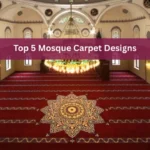
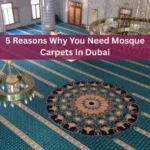
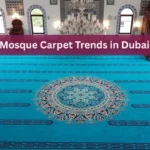
Patterns or textures for masjid carpets include motifs inspired by Islamic art and calligraphy. These textures are intended to be non distracting and only include symbols of a peaceful nature to prevent any distraction for mosque goers. Often, these patterns include symbols of serenity to soothe mosque goers.
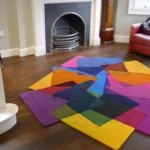
While conventional carpets might showcase some modern, eclectic, and even abstract designs for aesthetic purposes, mosque carpets exude a timeless elegance which is more fitting for a holy setting such as a mosque. They are not mere interior decorations but reflect their unique heritage and tradition of reverence.
The points mentioned above should have made it clear by now that there are features that distinguish mosque carpets from other types of carpets. Both have unique materials, and the only differences are their purposes and size: one is used for everyday purposes, whether in a house or a business, and the other is used for praying purposes only.