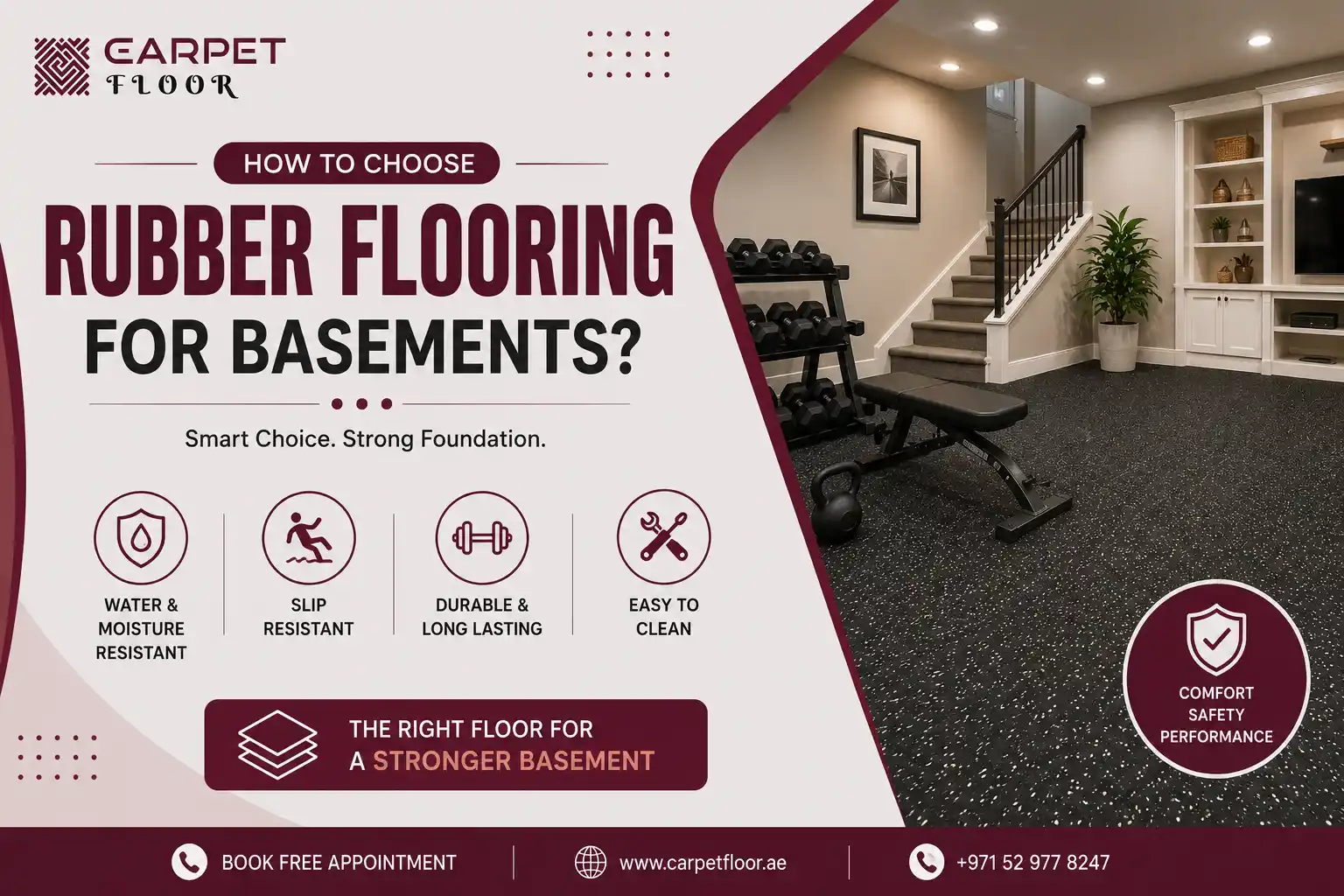
If you are looking for new flooring for your home decor, you may have come across rubber flooring. It is a trending option for many Dubai homes and businesses. But is it perfect for you? At Carpet Floor, we help every homeowner find the right floor option for your space. In this information, we will look at the pros and cons of rubber flooring in simple words.
No Comments
Pros And Cons Of Rubber Flooring
What Is Rubber Flooring?
Rubber flooring is a soft and bendy floor for comfortable walking on underfoot. Rubber floors are made from recycled rubber and man-made types like SBR and EPDM. It is available in tiles, rolls, or mats, and each one works great. Tiles snap together and fit smaller rooms. Rolls are better option for bigger areas since there is less seaming to worry about. Mats are just simple to grab and move wherever you need them. This is why you will see rubber flooring turn up in gyms, home workout rooms, garages, workshops and offices.
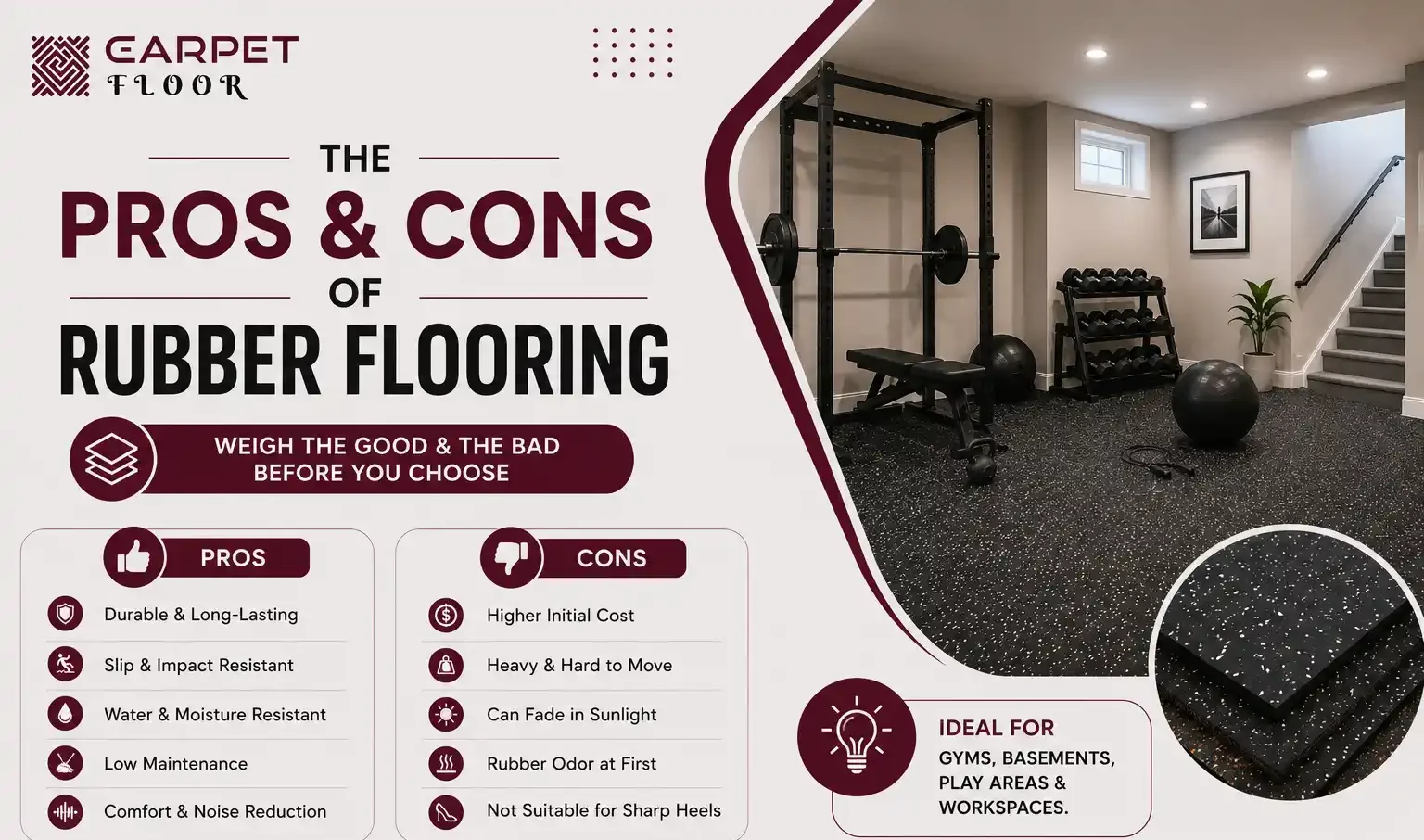
What Are the Pros of Rubber Flooring?
Excellent Durability
Rubber holds up good against heavy foot traffic, gym equipment and daily wear. Lifespan depends on its quality, thickness and usage.
Strong Absorption
It cushions shock from dropped weights or equipment, making it famous in gyms and workout areas.
Comfortable Underfoot
Compared to tile or concrete, rubber feels softer, easing strain during standing or exercise.
Slip Resistance
Textured rubber floor surfaces generally offer the best traction, though no flooring fully prevents slips.
Reduction
Rubber dampens footstep and impact noise, useful in home gyms and multi-level buildings.
Water and Moisture Resistance
Many products resist water and moisture well, but water-resistant doesn’t always mean fully waterproof.
Easy Maintenance
Sweeping, vacuuming, and damp mopping usually keep it clean. Use products suited to your specific flooring type.
Protects the Subfloor
A rubber layer shields concrete or other subfloors from scratches and impact.
Suitable for High-Traffic Areas
Built to handle repeated stress, rubber performs well where foot traffic is constant.
What Are the Cons of Rubber Flooring?
Higher Initial Cost
Quality rubber flooring can cost more upfront than some basic options, though this varies by product and thickness.
Rubber Odour
New rubber, especially recycled rubber, may have a noticeable smell at first, which ventilation helps fade.
Limited Design Options
Rubber tends to have a practical, industrial look. Colours and finishes exist, but the range is narrower than vinyl, laminate, or ceramic tile.
Sensitive to Certain Chemicals
Oils, solvents, and harsh cleaners can stain or damage some products. Follow manufacturer cleaning instructions.
Installation Can Be Difficult
Interlocking tiles are usually easy to handle, but large rolls can be heavy and tricky to position.
Can Be Affected by Sunlight
Some rubber may fade with prolonged direct sun exposure. Check UV resistance for sunlit or outdoor areas.
Not Ideal for Every Interior Style
If you want a wood, marble, or luxury stone look, rubber may not match that aesthetic.
Rubber Tiles vs Rubber Rolls
| Feature | Rubber Tiles | Rubber Rolls |
| Installation | Easier to handle | More difficult |
| Seams | More seams | Fewer seams |
| Replacement | Easy to replace sections | More difficult |
| Large areas | Less convenient | More suitable |
| DIY use | Often easier | Usually harder |
| Appearance | Modular | More continuous |
The right choice depends on room size, use, and desired finish — neither option is always better.
Where Is Rubber Flooring Most Useful?
- Home gyms – cushions floors, absorbs impact.
- Commercial gyms – handles heavy daily traffic.
- Garages – resists spills, protects concrete.
- Workshops – comfort during long standing hours.
- Play areas – softens falls for children.
- Schools – durable for busy hallways.
- Fitness studios – reduces noise and impact.
- Commercial spaces – withstands constant footfall.
- Basements – moisture resistance below grade.
Match the specific product to your space, since not all rubber types suit every use.
Is Rubber Flooring Good for Dubai?
Dubai’s climate brings heat, dust, strong sunlight, air conditioning, humidity, and heavy foot traffic — factors worth considering with rubber flooring in Dubai homes and businesses. Heat and UV resistance matter most near windows or sun-exposed areas. Not all rubber flooring fits the UAE’s climate automatically, so checking specifications first is important.
How to Choose the Right Rubber Flooring
Consider intended use, room location, foot traffic, and impact level, along with thickness, density, and surface texture. Factor in rubber type, tile or roll format, moisture and sun exposure, and floor installation method. Choosing on appearance alone often leads to disappointment.
How to Maintain Rubber Flooring
- Sweep or vacuum regularly.
- Clean spills quickly.
- Use a suitable mild cleaner.
- Avoid harsh chemicals unless approved.
- Keep the floor free from oil and solvents.
- Follow the manufacturer’s instructions.
Frequently Asked Questions
Is rubber flooring good for home use?
Yes, it works well in home gyms, basements, and garages thanks to comfort and durability.
Is rubber flooring waterproof?
Often water-resistant, but not always fully waterproof. Installation quality matters.
How long does rubber flooring last?
With premium quality and care, it can last many years, depending on product and use.
Does rubber flooring smell?
New rubber, especially recycled rubber, can have a temporary odour that fades with ventilation.
Is rubber flooring easy to clean?
Yes, regular sweeping and damp mopping usually keep it in good shape.
Is rubber flooring good for gyms?
Yes, its shock absorption and durability make it a popular gym flooring choice.
What is better, rubber tiles or rubber rolls?
It depends on the space, but rubber tiles fit smaller, rolls suit larger continuous areas.
Can rubber flooring be used outdoors?
Some products can, but UV resistance should be checked first.
Is rubber flooring good for garages?
Yes, it protects concrete and resists spills well.
Is rubber flooring safe for indoor spaces?
Generally yes, though proper ventilation helps during initial installation.
Conclusion
Rubber flooring holds up well. It feels comfortable to walk on, and cushions falls. It does not slip much. It is also easy to clean. That said, it is not perfect. It costs a bit more upfront, can smell when it’s new, doesn’t come in many designs, and certain chemicals can damage it. Installing it isn’t always easy either. Which type works best for you comes down to the room, how it’ll be used, its thickness, and how it’s fitted. As carpet flooring providers, we’ve seen how much the right floor matters.