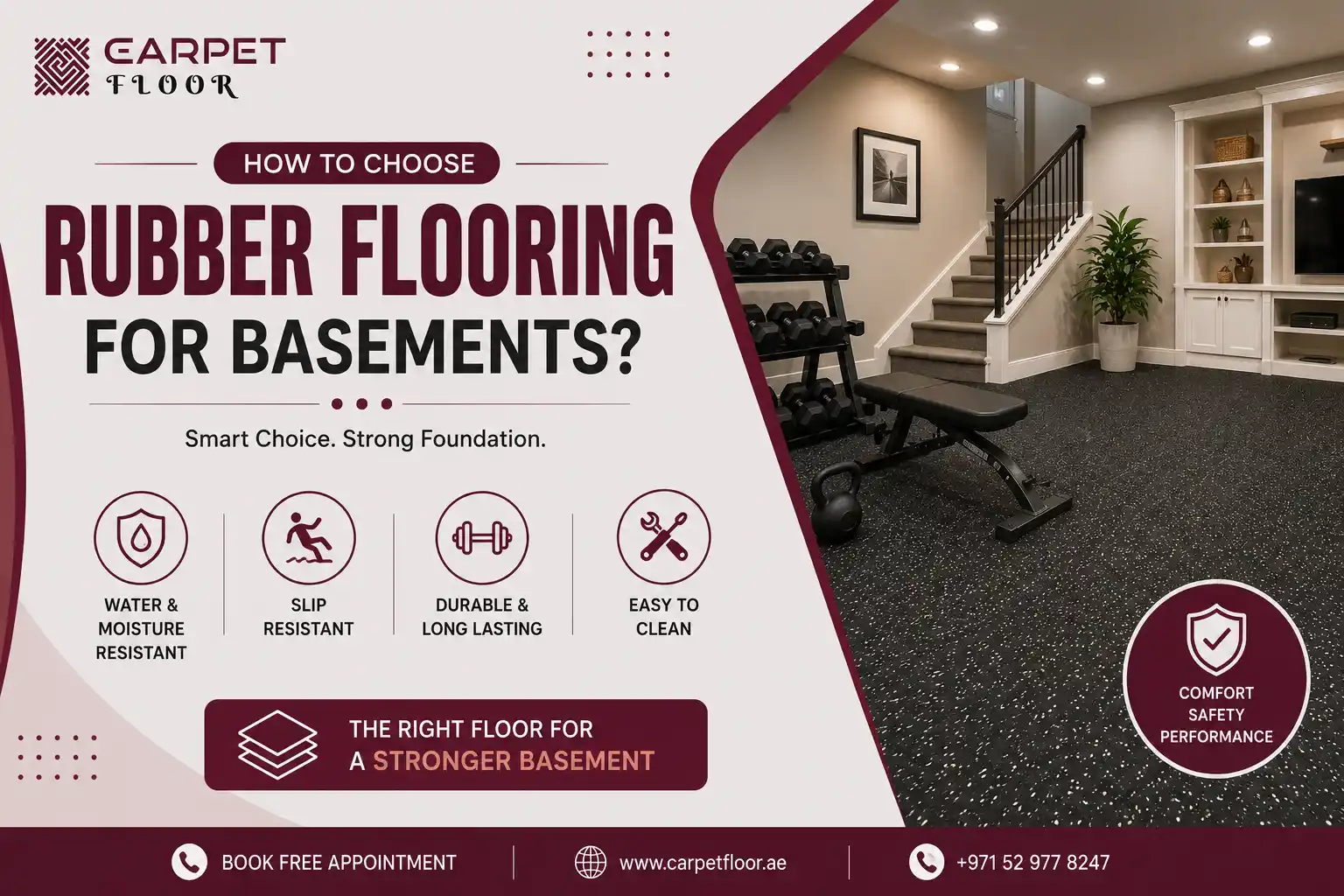
A basement is different from a normal room. It sits below ground. This means it deals with moisture, damp concrete, humidity, and cold air. It also gets heavy use, noise, and needs constant cleaning.
This means choosing the right floor takes extra care. Rubber flooring is one option many Dubai homeowners consider for basements. At Carpet Floor, people ask us about this often. This blog will help you decide what to check before you buy.
Rubber flooring can be a better choice for basements in Dubai. It holds up good with regular use. It feels comfortable to walk on, and cushions falls. It also resists slips and cuts down extra noise. This helps in a basement, since these areas often get damp.
Rubber flooring is also easy to wash and maintain, especially rubber floor tiles and rubber flooring rolls. Keeping them clean requires sweeps and a damp cloth. However, rubber floors do not resolve moisture issues in your home. If your basement is wet with water leakage and humid conditions, get them resolved first. The floor will just be placed over them.
Basement floors are located beneath the earth; hence, you have to take into consideration the moisture content before choosing any floor material. You may not even see it. Water seepage, bad drainage, and cool walls can all cause this.
Before you put in rubber flooring, test your concrete floor for moisture. Place a sheet of plastic on the floor. Leave it for one or two days. Then look for water drops under it. It is better to solve any moisture issues before the floor covering. One can fix the drainage system, put in a sump pump or even seal the cracks. It is always good to refer to the manufacturer’s instructions. Rubber flooring needs a dry substrate beneath.
Rubber Tiles
Installation of rubber basement tiles is easy and they can easily be changed when there is damage to them.
Rubber Flooring Rolls
Rolls cover large spaces with fewer seams, a perfect fit for open basements needing one continuous surface.
Rubber Flooring Mats
Mats work good for smaller zones, like under a workout bench, and are easy to move or swap out.
Recycled Rubber vs Virgin Rubber
Reused rubber is cheaper and made from recycled material. Virgin rubber contains EPDM rubber that has a smooth finish and low odour.
Thickness
Thicker rubber gives great shock absorption and fits heavy equipment. Thinner choices work for low foot traffic.
Surface Texture
Textured floor surface improves slip resistance and removes dust. Smooth surfaces clean down easier but can feel slippery when wet.
Density
Denser rubber feels firmer and lasts longer under heavy loads, while softer rubber may compress over time.
Size and Layout
Tiles fit smaller or irregular rooms, while rolls fit long, open basements with fewer seams.
Colour and Design
Darker or neutral colours hide scuffs and blend with basement interiors.
Home gyms require a harder rubber to absorb weight shock and minimize noise. Soft and easy-to-maintain mats and tiles will work well for playrooms. Cuts and oil resistance will be perfect for workshop floors. Living rooms can be covered with a rubber floor that has a smooth surface.
Rubber flooring provides an extremely durable surface which can tolerate heavy foot traffic. The rubber flooring helps to absorb shock and is soft on feet, thereby minimizing the risk of slips and noises.
Rubber flooring has some downsides. Upfront cost can be higher than basic carpet tiles. Some products carry a rubber smell that fades over time. Design choices are more limited than vinyl flooring or laminate flooring. Weighted rolls can be hard to carry alone, and moisture problems beneath floor can still cause problems if not fixed properly.
Dust and grit should be swept or vacuumed on a regular basis. Mop with water when you need a more thorough cleaning, and spills should be cleaned up promptly. Be sure to use cleaners that are specifically designed for rubber flooring.
Avoid installing over damp concrete or ignoring small leaks. Choosing the wrong thickness, skipping instructions, using the wrong adhesive, or poor subfloor prep can shorten the floor’s life. Poor ventilation and choosing flooring by looks alone are also mistakes to avoid.
Is rubber flooring good for basements?
Yes, once moisture issues are handled and the right type is chosen.
Is rubber flooring waterproof?
Many products are water resistant, but they are not a substitute for fixing a moisture source.
Can rubber flooring be installed over concrete?
Yes, as long as the concrete is clean, dry, and level.
What thickness is best for a basement gym?
Thicker rubber handles weights and equipment better.
Does rubber flooring protect against moisture?
It resists surface moisture but will not stop water coming from below.
How do you clean rubber basement flooring?
Sweep, vacuum, and damp mop with a suitable cleaner.
Does rubber flooring have a smell?
Some products do, especially recycled rubber, though it usually fades.
Is rubber flooring good for a basement gym?
Yes, thanks to its shock absorption and slip resistance.
Installing rubber flooring in your basement entails several things that you have to check. The factors include the presence of moisture, subfloor condition, flooring material, thickness, and intended use of the basement. Other factors that you have to consider include comfort, durability, maintenance, and the installation process. Make sure that there is no problem with moisture in your basement before installing any flooring in it. If you are undecided on what flooring material to install, experts from Carpet Floor will guide you on comparing rubber flooring to other materials such as SPC flooring.