Underlay is extremely important for underfoot cushioning. Carpet underlay underneath your carpet is something that people in Dubai hardly pay any attention to. However, underlay is very important because it cushions every step you make. Additionally, underlay will protect the backing of your carpet. Underlay also provides some warmth in a room. What type of carpet underlay should you choose? Well, this is a common question asked by many clients at Carpet Floor. This is how we answer it.
No Comments
What Type of Carpet Underlay Should You Choose?
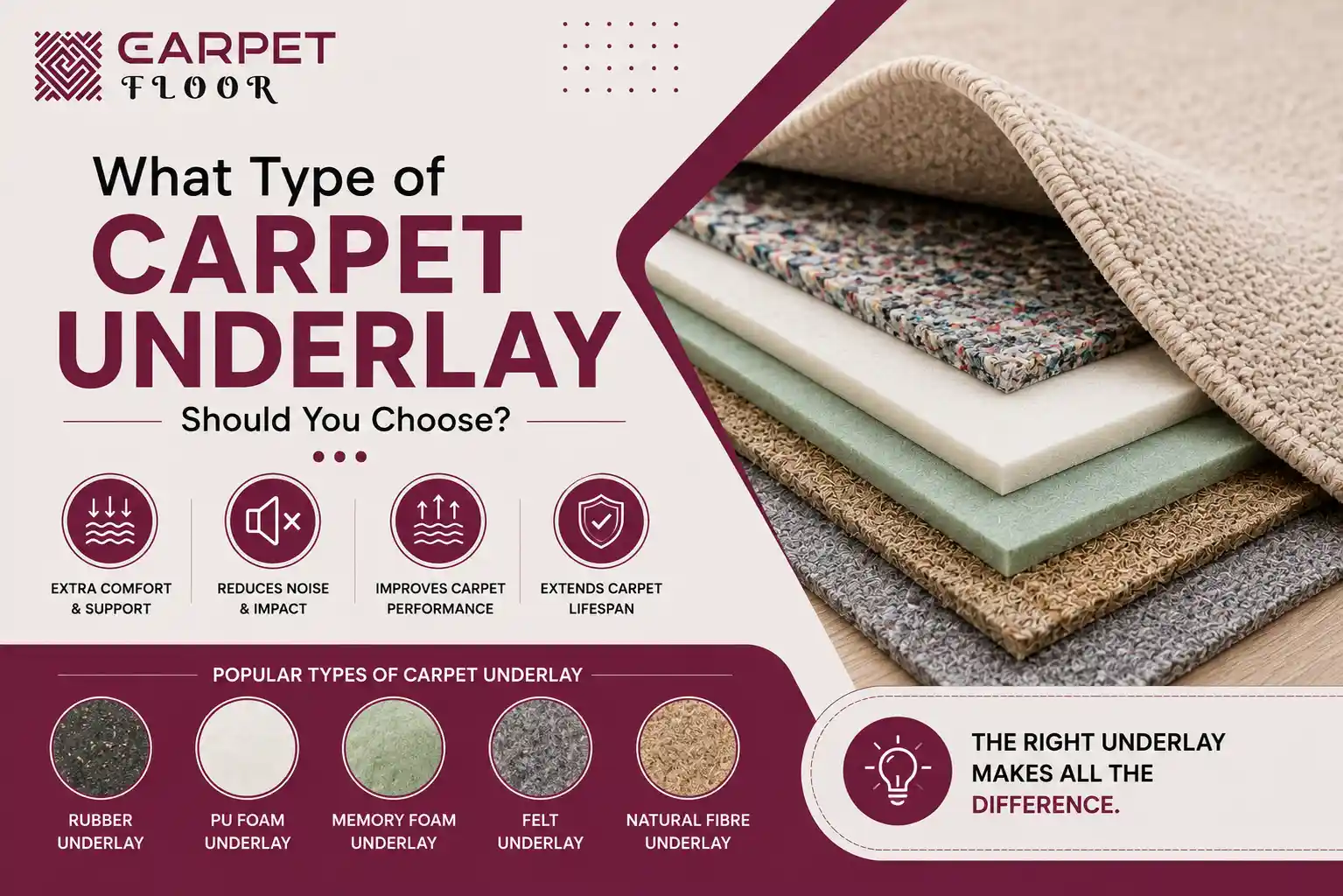
What Is Carpet Underlay?
Carpet underlay in Dubai is a layer that is put between your carpet and the subfloor. The underlay for carpet is not visible after installation; however, it plays an important part beneath your carpet. The underlay will support your carpet’s weight and give it form. It is great to lay your carpet on the subfloor rather than the simple subfloor.
Why Is Carpet Underlay Important?
Good underlay makes a real difference. It gives softer underfoot comfort, especially in bedrooms and living rooms. It helps reduce daily wear on the carpet fibres and backing. Underlay can minimize indoor noise and important consideration for both apartments and multi-story homes. The underlay provides some insulation on the floor, making rooms warmer.
What Are the Main Types of Carpet Underlay?
PU Foam Underlay
This underlay is soft and bouncy. It feels warm and nice under your feet. It works well in bedrooms. It also suits living rooms where comfort matters most.
Rubber Underlay
This underlay is heavy and firm. It handles lots of walking every day. It also helps block noise. This makes it good for busy rooms.
Felt Underlay
This underlay is thick and firm. It gives full support under the carpet. It helps the carpet stay flat and comfortable. Wool carpets often use this type of underlay.
Wool Felt Underlay
This underlay is made from wool or recycled fibres. It feels soft and natural. Many people like it for eco-friendly homes. It also gives gentle cushioning.
Latex Underlay
This underlay is firm. It holds the carpet tightly in place. It stops the carpet from sliding. It works well for long-term use.
Double-Stick Underlay
This underlay glues to both the floor and the carpet. It needs careful installation. It works well for busy commercial spaces. Offices and shops often choose this type.
Non-Slip Underlay
This underlay grips the floor firmly. It stops rugs from sliding around. It works great on stairs. It also keeps small mats steady and safe. No single type is best for every home. The right choice depends on your carpet and how you use the room.
How Thick Should Carpet Underlay Be?
Thicker underlay doesn’t always mean more comfort, so going bigger isn’t always the right move. What matters most is choosing the thickness that fits your space. Common options run from 7mm to 12mm. Thinner pads, around 7mm and 8mm, work best in offices and other busy areas. Thicker pads, around 10mm and 12mm, make bedrooms feel more comfortable and cozy. One more thing to check some carpets only keep their warranty valid with a specific thickness.
Which Carpet Underlay Is Best for Different Rooms?
Bedroom
Pick a soft underlay for your bedroom. It feels nice when you walk on it in the morning. Soft underlay works great with soft bedroom carpets too.
Living Room
Your living room needs a bit of both. You want comfort, but it also has to last. Kids and pets use this room a lot, so pick something that can handle daily use.
Stairs
Stairs need safe underlay. Pick one that grips well and does not slip. This matters a lot with stair carpets, since people walk up and down all day.
Office
Offices get a lot of foot traffic. Pick a strong underlay that will not wear out fast. This works well under office carpets in busy workspaces.
Hotel or Commercial Space
These places need tough underlay. It has to handle many people walking all day, every day. Heavy-duty underlay is the best choice here.
Apartment
In apartments, noise matters most. Choose an underlay that blocks sound between floors. This helps keep things quiet for the neighbours below, especially with wall to wall carpet.
Foam vs Rubber vs Felt Underlay
| Underlay Type | Comfort | Durability | Sound Reduction | Best For |
| PU Foam | High | Moderate | Moderate | Bedrooms, living rooms |
| Rubber | Moderate | High | High | High-traffic areas, offices |
| Felt | Moderate | High | Moderate | Wool carpets, stairs |
How to Choose the Right Carpet Underlay
Think about your carpet type first, since some carpets need specific underlay. Consider room usage, foot traffic, and the comfort level you want. Check the subfloor condition and any furniture weight in the room. Finally, follow the manufacturer’s installation and thickness guidelines.
Can Old Carpet Underlay Be Reused?
Only sometimes. You need to see if it has flattened out or has no cushioning left. Is there any damage, smell, or moisture? If the underlay is still supportive and clean enough, then reuse. But if you feel it has gone thin, flat and/or moist, then you are best to get new underlay.
Common Carpet Underlay Mistakes
Avoid choosing underlay based on price alone. Don’t pick excessive thickness without checking carpet guidelines. Never ignore the manufacturer’s recommendations. Match the underlay to your traffic level, and never reuse damaged or damp underlay.
Frequently Asked Questions
What Is the Best Type of Carpet Underlay?
It really comes down to the room. Foam feels soft and cozy in bedrooms. Rubber holds up better in busy spots like hallways.
Is Foam or Rubber Underlay Better?
Foam wins on comfort. Rubber wins on toughness. Choose foam for a soft feel, or rubber if the room gets a lot of foot traffic.
What Thickness of Carpet Underlay Is Best?
Most underlay runs between 7mm and 12mm. The right pick depends on your carpet, your room, and what the manufacturer recommends.
Is Carpet Underlay Necessary?
Yes. Skipping it means less comfort and a carpet that wears out faster. Underlay gives your carpet the support it needs.
Which Underlay Is Best for High-Traffic Areas?
Rubber and felt both hold up well. They’re built for spaces where people walk often, like offices or hallways.
Can Carpet Underlay Reduce Noise?
Yes, it helps. A good underlay softens footsteps and cuts down on sound between floors, which matters most in apartments.
Can Old Carpet Underlay Be Reused?
Sometimes. Check for flat spots, damage, or dampness first. If it still feels firm and clean, it can go back down under new carpet.
Final Thoughts
Choosing the perfect carpet underlay is not hard. Just think about your carpet type. Think about how you use the room. Think about how many people walk on it regularly. There is no single “best” underlay for every room. At Carpet Floor, we prefer to choose the underlay that suits your room. Then check the maker’s rules before carpet installation starts. Do this one step right, and your carpet will feel comfortable and last a long time.