Are you planning new floors for your house and offices? LVP flooring is one of the most popular options for floors available today. This complete guide from Carpet Floor will give you all the details about what LVP flooring is, how it works very well, and how to care for and maintain it for a long time. You will know everything easily and simply.
No Comments
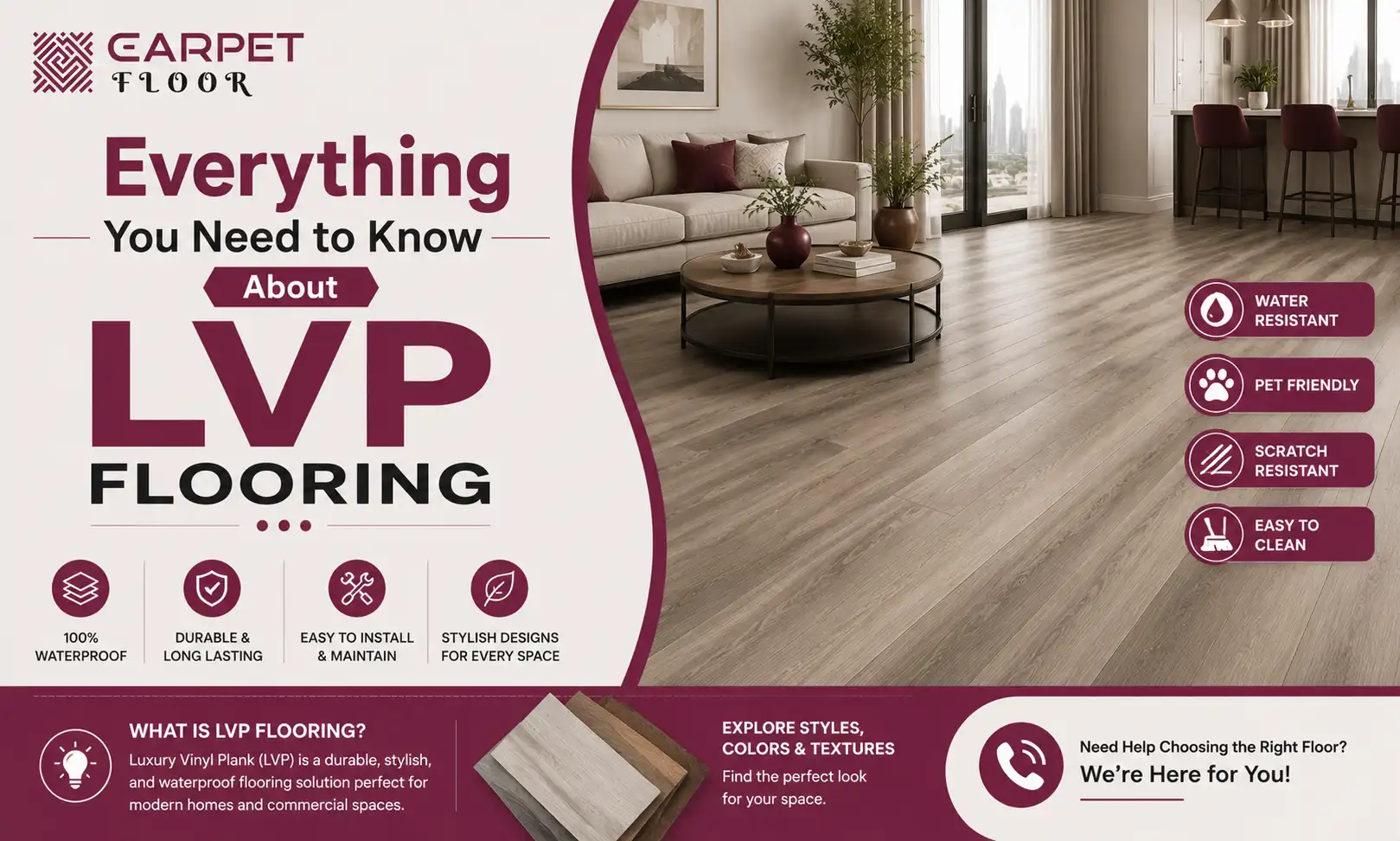
Everything You Need to Know About LVP Flooring
What Is LVP Flooring in Dubai?
LVP stands for Luxury Vinyl Planks in Dubai. LVP is a luxurious type of vinyl flooring that is made to original wood. Each of the vinyl planks is topped with an imitation of wood. Dubai people choose it since it is real wood without being expensive. This unique floor looks like long vinyl planks that can be installed by snapping them together or glueing them to the subfloor.
What Does LVP Stand For?
LVP stands for luxury vinyl plank. The word “luxury” means it has a better finish than basic vinyl. The word “plank” means it comes in long planks, not tiles or sheets include. This size makes it look like real wooden flooring.
How Is LVP Flooring Made?
LVP flooring is made from several layers pressed together. Each layer has its own job. Together, they make the floor good and very strong.
Wear Layer
The wear layer sits on top. It protects the floor from scratches and stains. A thicker wear layer lasts longer under heavy foot traffic.
Print Layer
Below the wear layer is the printed design layer. This layer shows the wood or stone pattern. It gives each plank its color and texture.
Core Layer
The core layer gives the plank its strength. Some cores are rigid and hard. Other cores are softer and more flexible. The core also helps the floor resist water.
Backing Layer
The backing layer is the bottom part of the plank. It adds cushioning and helps reduce noise. It also helps the plank sit flat on the subfloor.
Types of LVP Flooring
There are several ways LVP flooring can be installed. Each type suits different needs and budgets.
- Click Lock – Planks snap together without glue. This is called floating LVP flooring.
- Glue Down – Planks stick directly to the subfloor with adhesive.
- Loose Lay – Planks stay in place using friction and weight, with no glue or locks.
- Rigid Core – This type has a stiff, dense core. Rigid core flooring feels solid underfoot.
Advantages of LVP Flooring
There are some advantages to having LVP flooring in one’s house. One such advantage is that this kind of flooring is waterproof and much more resistant to moisture than any other type of flooring, including wood and laminate. Moreover, it is scratch-resistant and therefore can accommodate pets.
Pros and Cons of LVP Flooring
Every flooring type has strengths and weaknesses. Knowing both helps you make a smart choice.
Pros:
- Waterproof or highly water-resistant
- Scratch-resistant surface
- Easy to install and clean
- Comfortable to walk on
Cons:
- Can dent under heavy furniture
- Not as valuable for resale as real hardwood
- Lower-quality options may fade over time
LVP Flooring vs Laminate Flooring
Vinyl plank vs laminate flooring is a common question. Laminate is made mostly from wood fibres. LVP is made mostly from vinyl and plastic layers. LVP flooring handles water much better than laminate flooring Dubai. Laminate can swell if it gets wet. This makes LVP a safer choice for kitchens and bathrooms.
LVP Flooring vs Hardwood
LVP flooring costs less than hardwood in most cases. Hardwood scratches more easily and can warp with moisture. LVP flooring resists both problems better. However, hardwood can be sanded and refinished. LVP flooring cannot be refinished the same way. Each material has its own long-term value.
LVP Flooring vs LVT
LVP flooring and LVT flooring often get confused. LVT stands for luxury vinyl tile. The main difference is shape. LVP comes in long planks that look like wood. LVT comes in square tiles that often look like stone. Both share the same layers and materials.
Best Places to Install LVP Flooring
Many LVP flooring options are fully waterproof. This depends on the core layer used. LVP vs SPC flooring cores tend to be the most water-resistant. WPC vs LVP flooring cores are also water-resistant, but slightly softer. Always check the product label to confirm waterproof ratings before buying.
Is LVP Flooring Waterproof?
LVP flooring works well in many rooms around the house. Its water resistance makes it flexible for different spaces.
- Kitchens – Handles spills and splashes well.
- Bathrooms – Resists moisture and humidity.
- Bedrooms – Feels soft and warm underfoot.
- Living Rooms – Looks like wood without high cost.
- Offices – Handles rolling chairs and daily foot traffic.
How to Install LVP Flooring
Flooring Installation starts with subfloor preparation. The floor must be neat and clean, dry, and flat. Any bumps or gaps should be fixed first. Next, add underlayment for LVP flooring if needed. Some planks already include a built-in pad. Then lay the planks according to the chosen method, such as click lock or glue down.
How to Clean and Maintain LVP Flooring
Maintenance of LVP is easy. Only sweeping or vacuuming the floor is required to remove dirt from the surface. The cleaning process can be accomplished by mopping the floor using a wet mop along with a few drops of detergent.
Common Mistakes to Avoid
Many flooring Dubai problems come from small mistakes. Avoiding them helps your floor last longer.
- Skipping subfloor preparation before installation
- Using the wrong cleaning products
- Ignoring the manufacturer’s expansion gap instructions
- Installing over an uneven or damp subfloor
Frequently Asked Questions
What does LVP stand for?
LVP stands for luxury vinyl plank flooring.
Is LVP flooring waterproof?
Many LVP flooring products are waterproof, depending on the core kinds.
Is LVP better than laminate?
LVP handles water better than laminate flooring in most cases.
How long does LVP flooring last?
LVP flooring can last 10 to 20 years with proper maintenance.
What thickness is best for LVP flooring?
A wear layer of 12 to 20 mil works well for most homes.
Can LVP flooring be installed over existing tiles?
Yes, LVP flooring can often be installed over flat, stable tile floors.
Is LVP flooring good for pets?
Yes, its scratch resistant surface makes it a pet friendly flooring choice.
Does LVP flooring need underlayment?
Some LVP flooring needs underlayment, while other planks have it built in.
Final Words
LVP flooring is a good combination of beauty, strength, and low maintenance. LVP can be installed in any kitchen, bathroom, bedroom, or living room. Knowledge of its components and types will help you choose a proper product. For more guides related to flooring, visit our website, Carpet Flooring.






Follow Us On :
More Similar Posts